


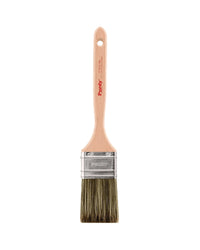


After you understand how to choose a paintbrush based on the type of coating you are using, the next step is to match the brush to the surface and area you plan to paint. A brush that suits the project properly can make the work easier, faster, and more accurate. Here are some practical guidelines to help you choose the right size and shape.
Paintbrushes are commonly available in sizes from 1 inch to 4 inches and usually come with either a straight edge or an angled edge. The choice between angled and flat styles often comes down to personal preference, but brush size plays a major role depending on the surface and detail level of the project.
Larger brushes, typically 3 inches to 4 inches wide, hold more paint and cover more surface with each stroke. This helps speed up the job and makes them a strong choice for bigger areas such as exterior siding, walls, doors, and decks.
For smaller or more detailed sections, a brush in the 1-inch to 1½-inch range is usually a better fit. An angled sash brush can also make it easier to reach narrow or awkward spaces. These smaller brushes work well for crafts, hobbies, window mullions, and tight corners.
Brushes sized between 2 inches and 2½ inches are often considered the most versatile option. They offer a good balance between control and coverage, which is why they are so commonly used for many types of painting jobs. A flat brush in this size range is well suited for furniture, cabinets, baseboards, railings, moldings, shutters, and gutters. An angled sash version of the same size is a good choice for window frames, door trim, casings, and cutting in along ceilings, walls, and baseboards.
Many people assume that a smaller brush is always easier to control, but that is not necessarily the case. A high-quality brush in a slightly larger size, such as 2 inches instead of 1½ inches, can often provide better precision than a cheaper, smaller brush. It can also help you work faster and leave a smoother finish.
That said, beginners should still be careful. Cutting in around woodwork without using painter’s tape can be difficult when you are still learning. In that case, starting with a narrower angled sash brush can make the job more manageable. It gives you better control over how much paint is applied and helps reduce the risk of getting paint onto trim or other finished surfaces.
Once you have chosen the right paintbrush for the job, the next step is learning how to load it properly for the best results.