


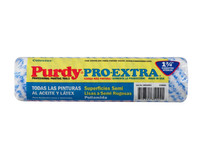


Some painters like to “prepare” a roller cover before use by dampening it with water or solvent. However, in professional testing environments, roller covers are typically used dry. If you do decide to lightly dampen the cover, make sure to spin it thoroughly—about five or six strong rotations—so it is only slightly moist. After that, remove any remaining excess moisture by blotting it with a paper towel. Conditioning is generally recommended only for water-based paints, and in that case, water should be used.
Using a tray liner can make cleanup much faster and easier. Before you begin, mix the paint thoroughly, then pour a portion into the tray well. Avoid overfilling—the well should remain about half empty so there is enough space to remove excess paint on the roll-off area.
Attach the roller cover to the frame, then use the edge of the cover to pull some paint from the well onto the roll-off section of the tray. Do not dip or fully submerge the roller into the paint. Instead, roll the cover across the tray grid toward the well using quick forward motions, then pull more paint back again. Repeat this process until the roller is evenly loaded—fully saturated but not dripping.
Take your time during this step. Properly loading the roller requires patience, especially when working with woven covers. It may take a few minutes for the paint to fully penetrate the fabric and reach the core.
Avoid trying to stretch the paint too far before reloading the roller. Working with too little paint can compress the fibers of the cover, making it harder to reload and slowing down your overall progress.